
Nightguards & Mandibular Splint (Sleep Apnoea)

Nightguards & Mandibular Splint (Sleep Apnoea)
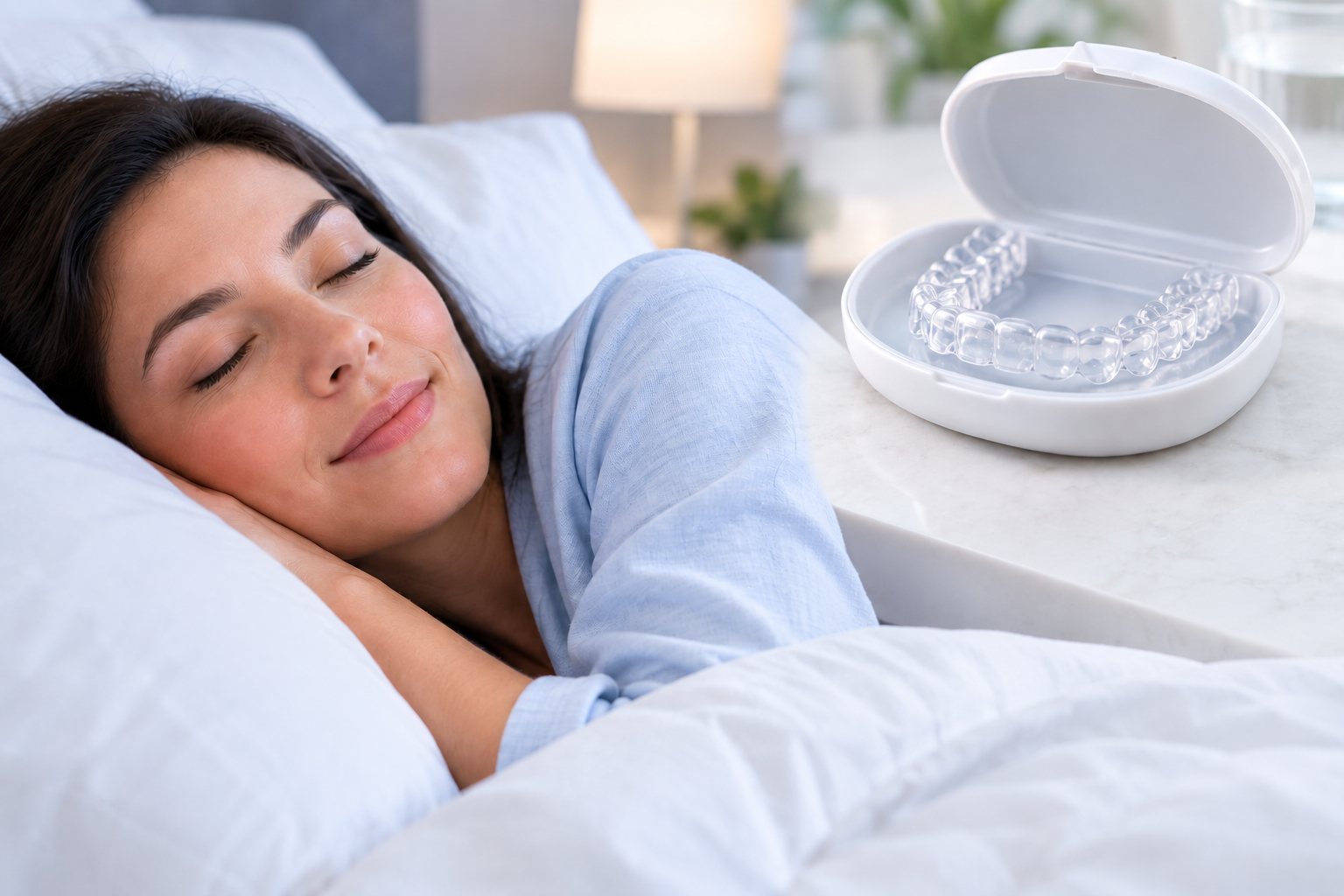
Not every dental appliance is designed for the same problem. Nightguards may be used to protect teeth from the effects of grinding or clenching, while certain mandibular advancement splints may be considered as part of the management of snoring or obstructive sleep apnoea in appropriately assessed patients.
Grinding and clenching can place repeated pressure on teeth, restorations and jaw muscles. Some people notice worn or chipped teeth, morning jaw tightness or headaches, while others are unaware they grind at all. A custom nightguard can create a protective barrier between the teeth and may form part of a broader management plan.
A mandibular advancement splint is a different type of appliance. It holds the lower jaw in a forward position during sleep to help maintain the airway. Because snoring and sleep apnoea can have medical causes and health implications, appropriate medical assessment and diagnosis are important before dental appliance therapy is considered.
We assess your teeth, gums, jaw joints and bite to determine whether a dental appliance is suitable. If a sleep-related appliance is being considered, care may involve communication with your GP or sleep physician. Appliances require review over time to check comfort, fit and oral health.
No. They are designed for different purposes and should not be used interchangeably.
Diagnosis of obstructive sleep apnoea requires appropriate medical assessment. A dentist may identify signs or discuss symptoms and can work alongside your medical practitioner where an oral appliance is suitable.
Talk to Hillier Road Dental & Implant Centre
If you are concerned about grinding, clenching, snoring or a recommended oral sleep appliance, arrange a consultation to discuss the next step.