
Broken Tooth

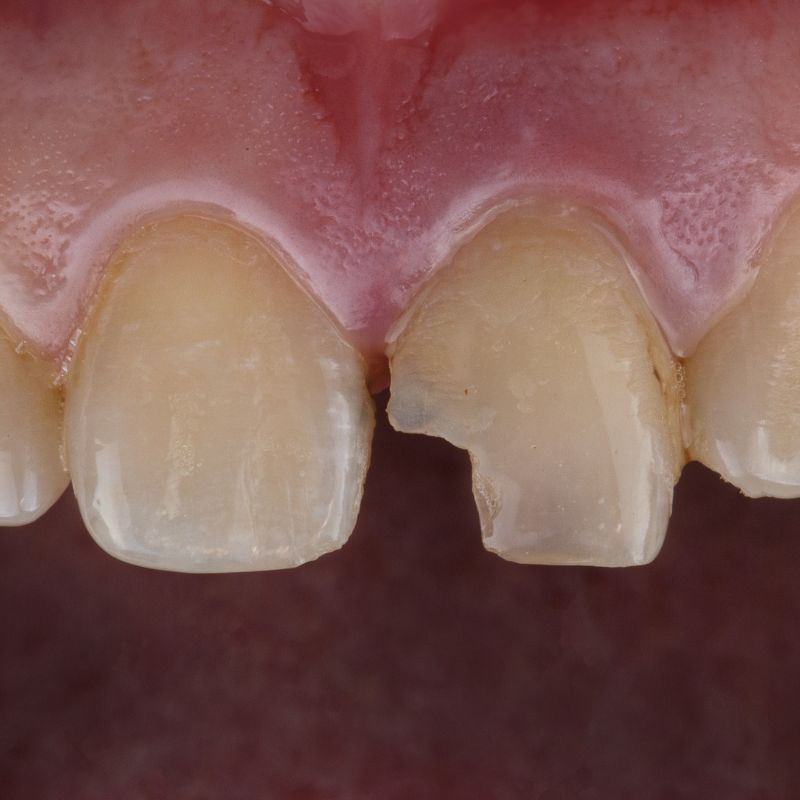
Broken Tooth
A tooth can break while eating, after an accident, because of an old restoration, or when a crack has gradually weakened it. Even when it is not painful, a broken tooth should be assessed so we can see how much structure is involved and whether the nerve has been affected.
Avoid chewing on the affected side and keep the area as clean as you comfortably can. If you have a broken fragment, keep it and bring it with you. Sharp edges, temperature sensitivity or pain on biting can all help us understand the extent of the damage.
Treatment depends on the size and depth of the fracture. Small chips may need smoothing or bonding; larger defects may need a filling, onlay or crown. If the nerve is involved, root canal treatment may be considered. Teeth that cannot be predictably restored may require extraction.
If a tooth has broken because of a significant impact, other teeth, the gums, lips or jaw may also have been injured. Prompt assessment is particularly important after trauma.
A painless break can still expose or weaken the tooth, so it is worth having it checked.
Sometimes a fragment can be useful, depending on the fracture. Bring it with you, but whether it can be reattached can only be determined after assessment.
Talk to Hillier Road Dental & Implant Centre
For a broken or chipped tooth, call (08) 8382 5777 and tell our team what happened so we can guide you on the next step.